
Perforated Stainless Steel Sheet: Hole Pattern, Pitch and Open Area
Evaluate round, square, slotted, hexagonal, platform and special perforation options according to grade, thickness, sheet size, hole dimension, pitch and required open area.
What Is Perforated Stainless Steel Sheet?
Perforated stainless steel sheet is a stainless steel plate processed with a defined hole shape, dimension and arrangement. It can provide airflow, light transmission, liquid passage or sound control while also serving separation, protection, filtration and architectural functions.
A correct specification requires more than stating “round holes” or “square holes”. Stainless steel grade, sheet thickness, hole size, pitch, bridge width, hole arrangement, open-area ratio, unperforated margins and sheet direction should be defined together.
Perforated Stainless Steel Sheet Types
Hole geometry directly affects appearance, open area, remaining strength and the functional behaviour of the sheet.

Round Hole Sheet
Used in ventilation, filtration, machine guards, architectural cladding and general technical applications.

Square Hole Sheet
Suitable for architectural panels, screening, separation and equipment surfaces requiring a regular angular appearance.

Slotted · Oblong · Oval Holes
Used where directional airflow, liquid passage, screening or a distinct visual rhythm is required.
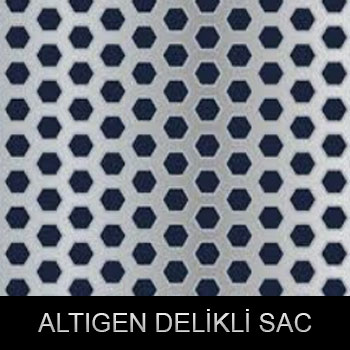
Hexagonal Hole Sheet
Evaluated for technical or decorative surfaces requiring a honeycomb appearance and high open area.
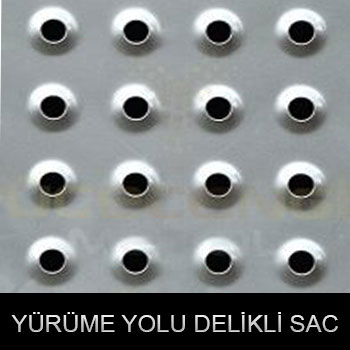
Walkway Type Sheet
Raised and perforated surfaces for walkways must be selected according to loading, span and slip-risk requirements.

Platform Sheet
Used on industrial platforms, steps and service areas after checking static load and support spacing.
Special Hole and Surface Options
In addition to standard round, square and slotted holes, the following patterns can be evaluated according to project requirements, sheet thickness and tooling availability.
Louvred Perforated Sheet
Directional openings used for airflow, rain deflection and equipment protection.
Indented and Special Screening Holes
Special hole forms selected for agricultural, food-processing and screening applications.
Triangular and Honeycomb Patterns
Considered where passage area, visual rhythm and special separation performance are required.
Raised and Decorative Patterns
Evaluated from drawings or samples for grip, processing or distinctive architectural surfaces.
Grades, Thicknesses and Sheet Sizes
The following values represent common supply options. Exact availability and manufacturability are confirmed at the quotation stage.
| Property | Common options | Technical note |
|---|---|---|
| Stainless steel grade | AISI 304 and 316; 430 and 201 according to enquiry | Share corrosion environment, temperature and cleaning conditions. |
| Common thicknesses | 0.80 · 1.00 · 2.00 · 3.00 mm | Compatibility between hole dimension and sheet thickness must be checked. |
| Common sheet sizes | 1000 × 2000 · 1250 × 2500 · 1000 × 3000 mm | May vary according to pattern, grade and current availability. |
| Hole shapes | Round, square, slotted, hexagonal and decorative | Hole size and bridge width should be specified together. |
| Arrangement | U, Z, M and T patterns | Pitch and arrangement change the open-area ratio. |
| Custom production | Custom sheet size, holes, margins and layout | A technical drawing or approved sample is recommended. |
How to Specify Perforated Stainless Steel Sheet
A complete specification prevents confusion between hole size, pitch and bridge width, and helps us confirm production suitability, price and delivery more quickly.
1. Grade and Finish
State the stainless steel grade, such as AISI 304 or 316, and the required surface finish or protective film.
2. Thickness and Sheet Size
Provide sheet thickness, width and length in millimetres. Also state whether full sheets or cut-to-size panels are required.
3. Hole and Pitch
Define hole shape, hole diameter or dimensions, centre-to-centre pitch and the U, Z, M or T arrangement when applicable.
4. Borders and Quantity
Specify unperforated margins, pattern direction, quantity, delivery country and any drawing, cutting or bending requirement.
Round Hole Open Area Calculator
Calculate the approximate open-area ratio from hole diameter and centre-to-centre pitch. The result is theoretical and excludes unperforated margins and production tolerances.
Enter the dimensions and calculate. Hole direction, bridge width and manufacturability must be confirmed before ordering.
Hole Arrangements: U, Z, M and T
The arrangement defines the relative position of hole centres and affects open area, appearance and direction.

U Arrangement
Hole centres correspond to rectangular corners. P1 and P2 pitches are specified in the short and long directions.

Z Arrangement
Hole centres form an offset pattern. P1 and P2 dimensions define direction and centre distances.

M Arrangement
A square-based arrangement usually described with one pitch P; the 45° direction is important.

T Arrangement
Hole centres form an equilateral triangular pattern, commonly evaluated as a 60° staggered layout.
How to Select the Correct Perforated Sheet
Evaluate four points together for technical performance and appearance.
Required Passage
Air, light, liquid, sound or particle passage determines hole shape and required open area.
Strength
Sheet thickness, hole size, bridge width, support spacing and loading must be reviewed together.
Corrosion Environment
Indoor or outdoor use, marine exposure, chemicals and cleaning method affect grade selection.
Visual Direction
Pattern direction, unperforated margins and alignment between adjacent parts should be defined before cutting.
Applications of Perforated Stainless Steel Sheet
Perforated stainless steel combines technical function with a durable stainless surface.
Architecture and Facades
Solar shading, suspended ceilings, railings, partitions, decorative panels and facade cladding.
Ventilation
Air grilles, fan guards, air-transfer panels, acoustic surfaces and machine enclosures.
Filtration and Screening
Food, agriculture, process equipment and particle-classification applications.
Machine Guards
Protection around moving parts, electrical enclosures and industrial safety panels.
Furniture and Urban Equipment
Benches, shelving systems, bins and custom metal furniture.
Platforms and Walkways
Steps, service platforms and industrial access surfaces selected with an engineering review.
Perforated Stainless Steel Sheet Enquiry
Price depends on grade, thickness, sheet size, hole geometry, pitch, open area, unperforated margins and quantity. Esko Paslanmaz evaluates Türkiye-wide supply and export enquiries together with packing and delivery requirements.
Frequently Asked Questions
Which hole shapes are available?
Round, square, slotted, oval, hexagonal and various special patterns can be evaluated according to thickness, grade, tooling and quantity.
What is the difference between 304 and 316 perforated sheet?
Both are widely used stainless steel grades. Grade 316 generally provides higher resistance in chloride-bearing, marine and more demanding environments, but the operating conditions should be reviewed.
What does open area mean?
Open area is the ratio of total hole area to the perforated surface. It affects airflow, light, liquid passage, acoustic behaviour and remaining sheet strength.
Can the hole diameter be smaller than the sheet thickness?
It may be possible for certain combinations, but tool load, deformation risk, material grade and production method must be reviewed before confirmation.
Can perforated sheet be cut and bent to custom dimensions?
Yes. Cutting and bending can be evaluated, but hole position, bending line, margins and deformation risk should be checked in advance.
Do you supply outside Türkiye?
Yes. Export enquiries are evaluated according to sheet dimensions, quantity, surface protection, packing and agreed delivery terms.